

Fire-Rated Windows for Commercial Buildings: Complete Safety & Installation Guide

Fire safety is one of the most critical aspects of commercial building design. Offices, retail stores, schools, hospitals, and industrial facilities must comply with strict fire safety regulations to protect occupants and minimize property damage.

One important safety feature often overlooked is fire-rated windows. Unlike standard glass windows that shatter quickly under high heat, fire-rated windows are specially engineered to withstand fire exposure for a specific period of time. These windows help slow the spread of flames, heat, and smoke, providing valuable time for evacuation and emergency response.
In this comprehensive guide, we will explain what fire-rated windows are, how they work, the types of fire-rated glass, their benefits, and why they are essential for commercial buildings.
What Are Fire-Rated Windows?
Fire-rated windows are specially designed windows that can resist fire and extreme heat for a specific amount of time. These windows are made using advanced fire-resistant glass and durable framing systems that help contain fire and prevent it from spreading rapidly through a building.
In a fire emergency, standard glass can break within minutes due to extreme temperatures. Fire-rated windows, however, are tested under controlled conditions to ensure they can withstand fire exposure and maintain structural integrity.

These windows are commonly installed in:
Office buildings
Hospitals and healthcare facilities
Schools and universities
Hotels and restaurants
Warehouses and industrial buildings
Retail storefronts
Commercial corridors and stairwells
Their main purpose is to protect occupants, slow down fire spread, and support building safety regulations.
Understanding Fire Ratings
One of the most important aspects of fire-rated windows is the fire rating. A fire rating indicates how long a window can withstand fire exposure during standardized fire testing.
Typical fire-rated windows have ratings of:

20 minutes
45 minutes
60 minutes
90 minutes
120 minutes
For example, a 60-minute fire-rated window is designed to prevent flames and heat from passing through the window for up to one hour during a fire.
Fire ratings are determined through testing procedures that follow building safety standards from organizations such as the National Fire Protection Association and the International Code Council.
These tests evaluate how well the window system performs when exposed to extreme temperatures and fire conditions.
How Fire-Rated Windows Work
Fire-rated windows are designed using a combination of specialized glass, reinforced frames, and heat-activated seals. These components work together to prevent flames and smoke from spreading between rooms or building sections.
Fire-Resistant Glass
The glass used in fire-rated windows is engineered to withstand high temperatures without breaking.
Fire-Rated Frames
The window frame must also resist fire exposure. Common materials include steel, aluminum, and specially designed fire-resistant framing systems.
Intumescent Seals
These seals expand when exposed to high heat, filling gaps around the window frame and preventing smoke or flames from passing through.
Together, these components create a protective barrier that slows down fire spread and improves building safety.
Types of Fire-Rated Glass
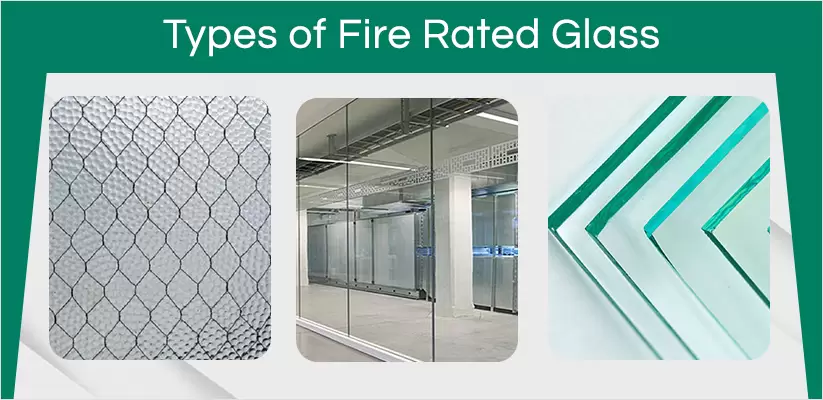
Several types of glass are used in fire-rated window systems. Each type offers different levels of protection and fire resistance.
Wired Glass Fire-Rated
Wired glass contains a metal wire mesh embedded inside the glass panel. The wire helps hold the glass together during a fire and prevents it from shattering.
Although wired glass was one of the earliest fire-resistant materials used in buildings, newer technologies have improved fire protection significantly.
Ceramic Fire-Rated Glass
Ceramic fire-rated glass is designed to handle extremely high temperatures. This type of glass can withstand heat levels exceeding 1600°F (870°C) without breaking.
Ceramic glass is commonly used in areas that require higher fire ratings and improved visibility, such as stairwells and fire barrier walls.
Intumescent Fire-Rated Glass
Intumescent glass is a multilayer system that contains special fire-reactive interlayers. When exposed to heat, these layers expand and create an insulating barrier that blocks heat and flames.
This type of glass offers some of the highest levels of fire protection available today and is often used in modern commercial buildings.
Fire-Rated Windows vs Regular Windows
Understanding the difference between standard windows and fire-rated windows is important when planning building safety systems.
Feature | Fire-Rated Windows | Standard Windows |
Fire Resistance | Yes | No |
Heat Protection | High | Very low |
Building Code Compliance | Required in certain areas | Not designed for fire safety |
Safety Performance | Slows fire spread | Breaks quickly in heat |
Standard glass can break in minutes during a fire, allowing flames and smoke to spread rapidly through a building. Fire-rated windows help contain the fire and protect occupants until emergency services arrive.
Why Fire-Rated Windows Are Important
Fire-rated windows provide several important benefits for commercial buildings.
Life Safety Protection
The primary purpose of fire-rated windows is to protect building occupants. By slowing down the spread of flames and smoke, these windows provide more time for safe evacuation.
Compliance with Building Codes
Many building codes require fire-rated windows in specific locations such as:
Exit corridors
Stairwells
Fire separation walls
Fire-rated doors
Interior partitions
Installing certified fire-rated windows helps ensure that a building meets safety regulations and avoids potential compliance issues.
Reduced Property Damage
Fire-rated windows help contain fires within specific areas of a building. This containment reduces the spread of fire and minimizes structural damage.
Improved Visibility and Natural Light
Modern fire-rated windows allow architects to incorporate natural lighting and open spaces without compromising safety. This makes them a popular choice in modern commercial design.
Insurance and Risk Reduction
Buildings equipped with proper fire safety systems may experience lower insurance risks and improved safety ratings.
Where Fire-Rated Windows Are Used
Fire-rated windows are installed in many parts of commercial buildings where fire protection is critical.

Common locations include:
Stairwells
Hallways and corridors
Office partitions
Fire-separation walls
School buildings
Hospital facilities
Retail storefronts
Industrial buildings
These windows can also be integrated into fire-rated glass doors, allowing visibility while maintaining safety.
Fire-Rated Windows for Commercial Glass Doors
Many commercial buildings use fire-rated glass in doors and partitions.
Fire-rated glass doors are commonly installed in:
Emergency exits
Office hallways
Hotel corridors
Commercial kitchens
Schools and hospitals
These systems provide safety while maintaining visibility and modern architectural design.
Installation and Maintenance
Installing fire-rated windows requires professional expertise. Improper installation can compromise the fire rating and reduce the effectiveness of the system.
Professional commercial glass specialists ensure that:
Fire-rated glass is installed according to manufacturer guidelines
Frames meet fire safety standards
Seals and barriers are properly fitted
Windows comply with building codes
Routine inspections are also important to ensure long-term performance.
Maintenance may include:
Inspecting glass panels for cracks
Checking frame stability
Ensuring seals are intact
Replacing damaged components
Regular maintenance ensures that fire-rated windows perform correctly during emergencies.
Professional Commercial Fire-Rated Window Services
Commercial properties require specialized glass solutions to meet safety standards. Professional commercial glass contractors provide services such as:
Fire-rated window installation
Fire-rated glass replacement
Commercial window repair
Fire-rated door glass installation
Safety inspections and compliance support
Working with experienced glass professionals ensures that fire-rated systems are installed correctly and meet safety requirements.
Final Thoughts
Fire-rated windows are a critical safety feature for commercial buildings. These specialized windows help slow the spread of fire, protect occupants, and support compliance with fire safety regulations.
Modern fire-rated glass systems provide both safety and design flexibility, allowing buildings to maintain visibility and natural lighting while meeting strict safety standards. If your building requires fire-rated window installation, repair, or replacement, working with experienced commercial glass specialists ensures that your property remains safe, compliant, and protected.


Comments